

by Jatin Bansal | Nov 17th, 2026
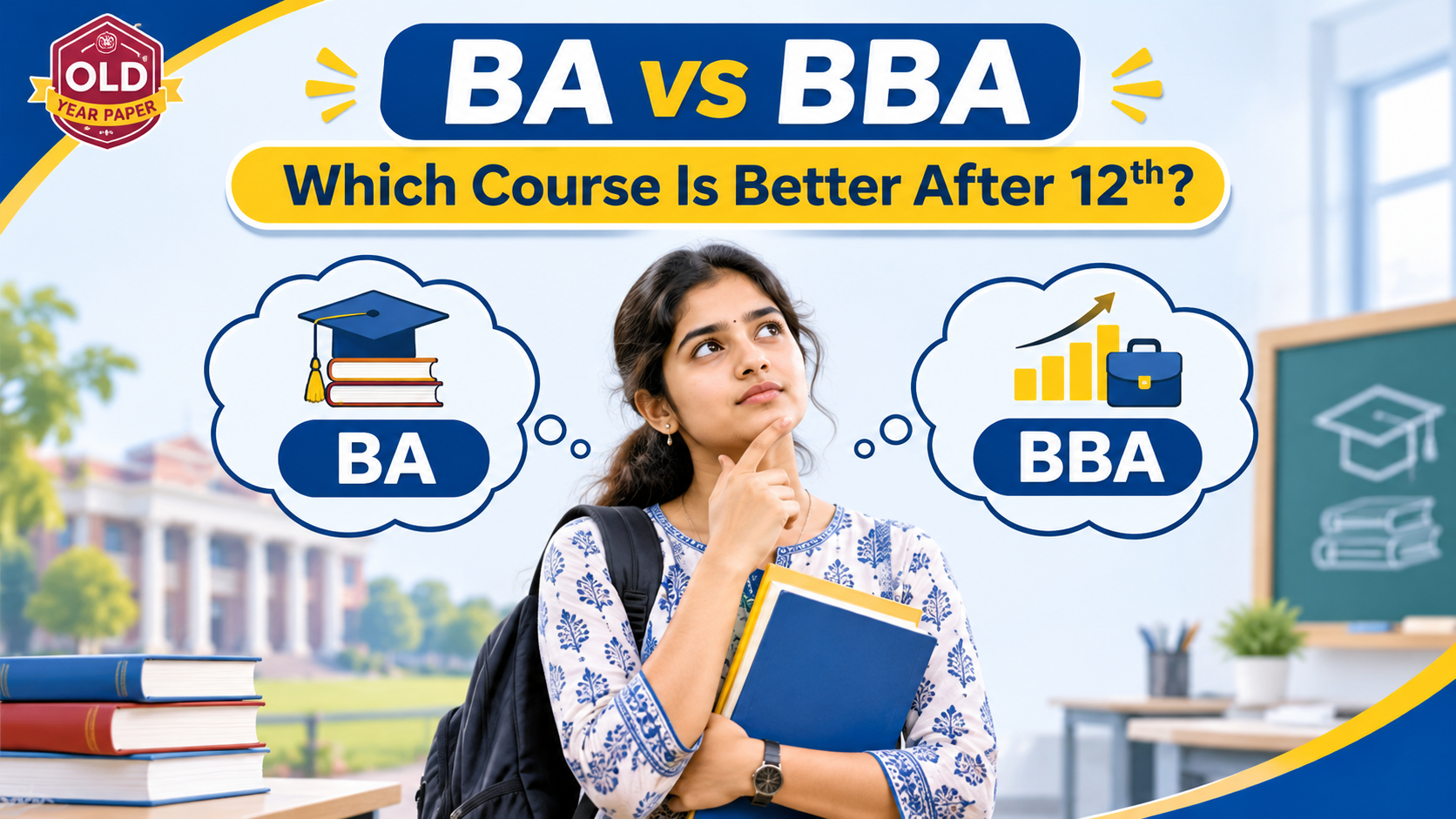
Choosing the right course after Class 12 can be confusing, especially when students have several career options. BA vs BBA is a common comparison among students interested in humanities, business, and management. Both degrees offer different subjects and career opportunities. Understanding their differences can help students select a course that matches their interests and future goals.
Bachelor of Arts (BA) is an undergraduate degree covering subjects such as English, History, Political Science, Psychology, Sociology, and Economics.
BA helps students develop communication, analytical, research, and writing skills. It is suitable for those interested in teaching, journalism, civil services, research, and humanities-related careers.
Students can also pursue postgraduate courses after graduation.
Bachelor of Business Administration (BBA) is an undergraduate programme focused on business and management.
Students study marketing, finance, accounting, human resource management, and business communication.
BBA is suitable for students interested in corporate jobs, entrepreneurship, marketing, and management. Practical projects, presentations, and internships can provide useful business experience.
The main difference between BA and BBA is their academic focus.
BA focuses on humanities and social sciences, while BBA concentrates on business administration and management.
BA graduates can explore opportunities in education, media, research, and administration. BBA graduates may pursue careers in marketing, sales, human resources, and business operations.
Both degrees can provide opportunities for higher education and professional development.
Students who have completed Class 12 from a recognised board can apply for BA or BBA, depending on university eligibility requirements.
Some institutions conduct entrance examinations, while others consider academic performance.
Both programmes commonly offer three-year undergraduate options, although four-year programmes are also available at certain universities.
Course fees depend on the institution, location, and programme structure.
Government colleges may offer relatively affordable programmes, while private universities can charge higher fees.
Students should compare tuition fees, scholarships, facilities, and placement support before selecting a college.
BA graduates can explore careers in journalism, content writing, research, and administration. Some professions require additional qualifications.
BBA graduates may find entry-level opportunities in sales, marketing, business development, and operations.
Both BA and BBA graduates can pursue an MBA, subject to admission requirements.
Students preparing for competitive examinations can also explore educational resources on OldYearPaper.
Choose BA if you enjoy humanities, social sciences, research, or writing.
Choose BBA if you are interested in business, entrepreneurship, and corporate management.
Consider your interests, budget, preferred subjects, and long-term goals before deciding.
The BA vs BBA decision depends on individual career interests and academic strengths. Neither degree guarantees success. Practical skills, internships, and continuous learning are equally important.
Choose the course that best supports your education, professional ambitions, and future career opportunities.
 BA vs BBA: Which Course Is Better After 12th? How to Prepare for BPSC TRE Using Previous Year Question Papers: Complete Preparation Guide JEE Advanced 2027 Exam Date Released: Check Exam Schedule and Latest Updates Questions Every Class 9–12 Student Has About Education CBSE Practical Exam Date Sheet 2027 Released: Class 10 & 12 Winter-Bound Schools Schedule Best AI Tools for Students in 2027: 5 Free Study Tools Government Jobs After 12th in 2026: Top Jobs, Salary & Eligibility Importance of Previous Year Question Papers: 10 Benefits RRB JE City Intimation Slip 2026 Link: Check Exam City & Download Slip CLAT 2027 Preparation: 7-Week Strategy & Previous Year Papers 2025 Government Job Alerts: Latest Recruitment Notifications Updated Daily How to Analyze Previous Year Question Papers to Maximize Your Government Exam Success List of Non-Core Branches of Engineering WHAT ARE THE IMPORTANT JOB TITLES IN A COMPANY Core Branches of Engineering in India 2025 TOP COURSES AFTER CLASS 12TH IN INDIA ARTS, SCIENCE AND COMMERCE - OLD YEAR PAPER Selecting an Engineering Branch or College for 12th Passed Students TYPES OF COMPANIES THAT VISIT YOUR CAMPUS PLACEMENTS
Old Year Paper is a one-stop-destination for all your exam preparation needs. We understand the importance of practice and how previous year question papers can be a valuable resource for students. That's why we have carefully curated and compiled previous year question papers for various exams in one place.